
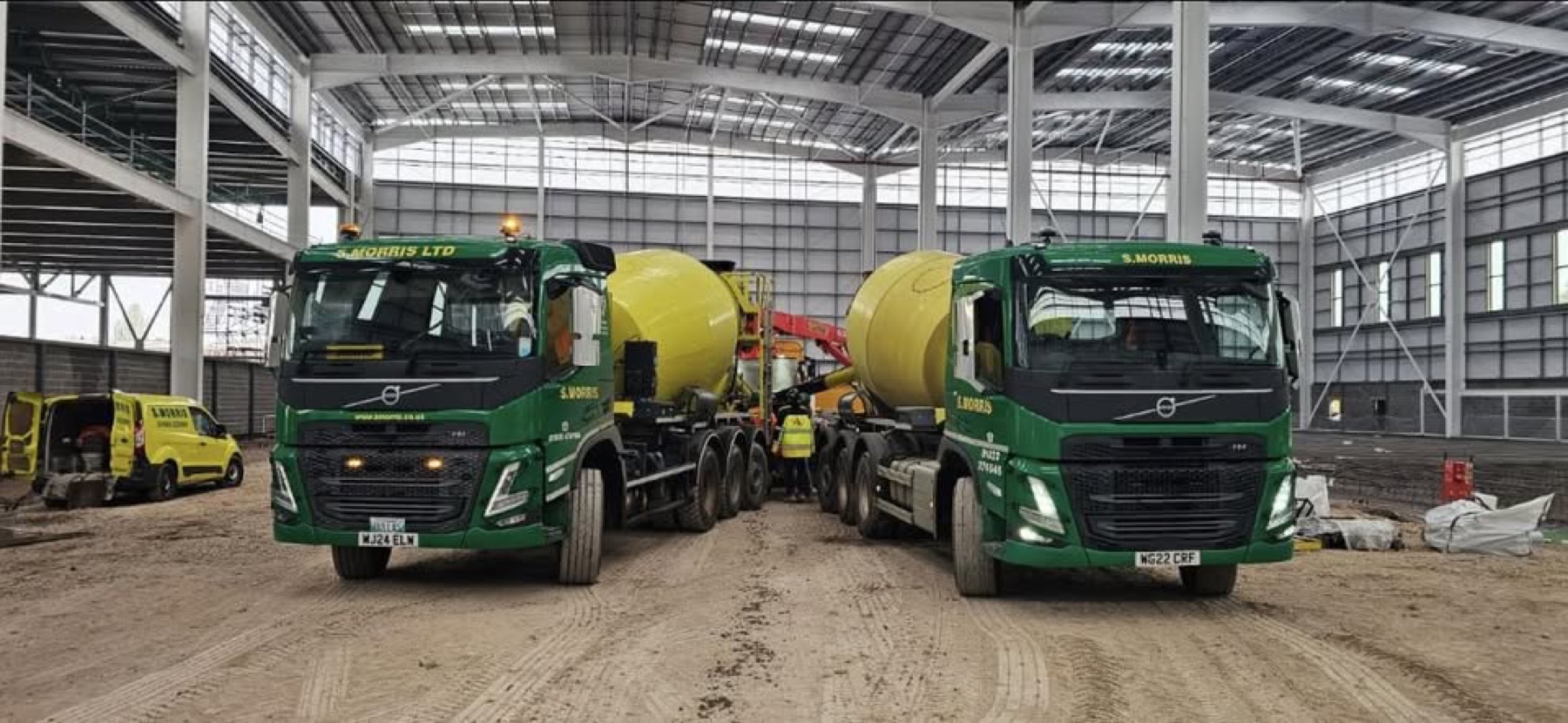
How lower-carbon ready-mixed concrete can help data-centre projects reduce embodied carbon while meeting demanding construction requirements.
The rapid growth of data centres across the UK is creating new opportunities for the construction industry. As demand for digital infrastructure, cloud computing and artificial intelligence continues to increase, so does the need for buildings that can support complex equipment, significant structural loads and demanding operational requirements.
However, constructing these facilities also presents an important challenge: reducing embodied carbon without compromising structural performance, durability or construction efficiency.
At S Morris Ltd, we recognise the important role that concrete innovation can play in meeting this challenge. Lower-carbon concrete offers an opportunity to rethink how concrete is specified, produced and delivered for data-centre foundations, piling, ground-bearing slabs and structural elements.
Why does embodied carbon matter in data-centre construction?
Data centres can require substantial quantities of concrete, particularly for piling, reinforced foundations, ground slabs and equipment-supporting structures.
Traditional concrete relies heavily on Portland cement, the manufacture of which is a significant source of carbon dioxide emissions. Reducing the quantity of conventional cement used in concrete, where technically appropriate, can therefore help lower the embodied carbon of a construction project.
For developers and contractors working towards increasingly demanding sustainability targets, concrete specification is an important area to consider early in the design process.
The objective is not simply to use less cement. It is to deliver concrete that meets the required strength, durability, workability and service-life requirements while reducing its environmental impact.
How does lower-carbon concrete work?
Lower-carbon concrete can be produced using a range of approaches, depending on the application, constituent materials and performance requirements.
1. Using alternative cementitious materials
One established approach is to replace a proportion of Portland cement with supplementary cementitious materials, such as ground granulated blast-furnace slag (GGBS), where suitable.
GGBS is a by-product of iron production that can be used as a cement replacement in appropriately designed concrete mixes. Depending on the mix proportions and specification, its use can significantly reduce embodied carbon compared with a conventional Portland-cement-based alternative.
For data-centre projects, suitable GGBS mixes can also offer practical benefits, including reduced heat generation during hydration. This can be valuable when designing and placing large foundation pours, where temperature control and the management of thermal cracking are important considerations.
Other developing approaches include calcined-clay binders and multi-component cementitious blends. These technologies may offer further opportunities to reduce reliance on conventional cement as their availability and commercial adoption increase.
2. Optimising concrete mix design
Lower-carbon concrete is not limited to replacing one material with another.
Careful mix design can help optimise cement content while still achieving the specified concrete performance. This requires consideration of the required strength class, exposure conditions, workability, curing arrangements and construction programme.
For contractors and developers, an optimised mix can potentially reduce both embodied carbon and material costs. However, any proposed changes must be validated through appropriate testing and agreed with the project design team.
3. Exploring emerging concrete technologies
The industry is also developing technologies designed to reduce the carbon footprint of concrete further.
These include systems that introduce captured carbon dioxide into fresh concrete, alongside new binder technologies intended to reduce emissions associated with cement production.
Such approaches may provide additional opportunities for future data-centre projects. Their suitability depends on commercial availability, the specific mix design, independently supported performance data and the requirements of the project.
Why is lower-carbon concrete particularly relevant to data centres?
Data-centre construction brings together several applications where concrete performance and carbon reduction must be considered together.
Foundations and piling
Large structural loads can require substantial foundation and piling works. Optimising the concrete used in these elements can offer a meaningful opportunity to reduce embodied carbon across the project.
Large foundation pours
Raft foundations and other substantial concrete elements can generate significant heat during hydration. Appropriately designed lower-carbon mixes can help manage heat development, although thermal performance must be assessed for the actual pour dimensions, weather conditions and construction method.
Ground slabs and structural elements
Concrete used in slabs and structural components must satisfy the relevant strength, durability and serviceability requirements. Lower-carbon alternatives need to be assessed against these requirements rather than selected on carbon performance alone.
Construction programme and supply reliability
Data-centre projects often operate within demanding construction schedules. Concrete must arrive consistently, remain workable for the intended placing method and achieve the required strength at the appropriate time.
A successful lower-carbon concrete solution must therefore work in practice, not just on paper.
Can lower-carbon concrete reduce project costs?
Reducing embodied carbon and controlling construction costs are increasingly linked objectives.
Potential cost benefits may arise from optimising cement content, reducing material waste, improving durability where demonstrated and selecting mixes that meet the required specification without unnecessary overdesign.
However, lower-carbon concrete is not automatically cheaper than conventional concrete. Alternative materials may have different purchase prices, transport costs or supply constraints. Some formulations may also require changes to curing arrangements or construction sequencing.
The most meaningful comparison is the cost per cubic metre of concrete that meets the same technical requirements, taking account of material costs, delivery, placing, curing, testing and programme implications.
Early collaboration between the concrete supplier, contractor, engineer and developer can help identify the most commercially effective solution before the mix is committed to the project.
The importance of early collaboration
For lower-carbon concrete to deliver its full potential, decisions need to be made early.
Engaging with the concrete supplier during design development allows proposed mixes to be assessed against the intended application, exposure conditions, strength requirements and delivery arrangements.
It also provides an opportunity to establish a carbon baseline and compare alternative mixes using consistent environmental product declaration data, where available.
For major data-centre developments, this process can help identify opportunities for carbon reduction before construction begins, reducing the risk of late specification changes and unnecessary cost.
Measuring progress towards lower-carbon construction
A credible lower-carbon concrete strategy should be supported by measurable evidence.
Important considerations include:
- Embodied carbon: compare the global warming potential of the proposed mix with an appropriate reference mix, using consistent assessment boundaries.
- Technical performance: confirm that strength, durability, workability and other specification requirements are met.
- Construction efficiency: assess delivery reliability, placing characteristics, curing requirements and the effect on programme.
- Commercial value: compare the total delivered and installed cost rather than material price alone.
- Supply-chain resilience: confirm that constituent materials can be sourced consistently for the volume and duration of the project.
By considering these factors together, project teams can make informed decisions about where lower-carbon concrete offers the greatest benefit.
Supporting a more sustainable construction industry
As the UK continues to invest in digital infrastructure, lower-carbon concrete has an important role to play in helping data-centre projects reduce their construction-related environmental impact.
Established approaches, including the use of GGBS and optimised mix designs, already provide practical routes to reducing embodied carbon in suitable applications. Emerging binder technologies and carbon-utilisation systems offer further opportunities as their performance, availability and commercial viability develop.
At S Morris Ltd, we believe that progress comes from combining practical construction knowledge with a commitment to quality, efficiency and responsible material use.
By considering concrete specification early, evaluating suitable lower-carbon alternatives and working collaboratively across the supply chain, data-centre project teams can make more informed choices about both carbon and cost.
Looking to explore lower-carbon concrete for your next data-centre project?
Contact S Morris Ltd to discuss your project requirements and how concrete mix selection, performance considerations and carbon data can support more informed construction decisions.
The suitability and availability of individual lower-carbon concrete mixes will depend on the project specification, constituent materials, testing requirements and supply arrangements. Proposed mixes should be assessed and approved by the relevant project design team.
Talking through a mix for a project? Ring the plant covering your postcode, or send the job through and we will come back to you.